KOMPOSITORIUM
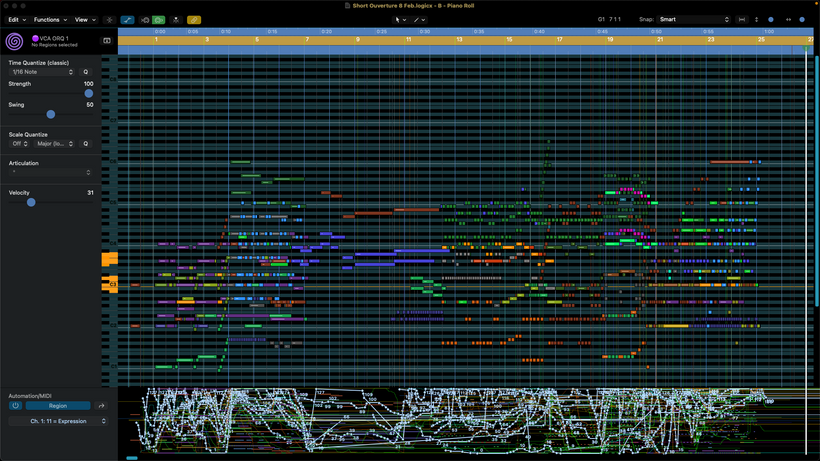
Why MuseScore/Dorico Users Need DAW MIDI Mockup Mastery
You’ve invested your creative energy into composing a magnificent symphony in MuseScore or Dorico, meticulously crafting your compositions with precision and detail. Yet, you know the truth: the power of your score often gets lost when played back with basic built-in sounds. That magnificent symphony, that intricate chamber piece – it sounds like a rough sketch, not the polished, professional orchestral work it deserves to be.
In today’s competitive landscape for film, game, and media scoring, a high-quality orchestral mockup isn’t just an option; it’s crucial for pitching your work and gaining client approval. Composers increasingly work independently, often without large studio budgets or in-house production teams. While notation software excels at putting notes on a page, it typically falls short in producing the broadcast-ready playback essential for showcasing your talent. You might lack the time, the specialized software, or the intricate expertise to create these professional mockups on your own.
This is why learning DAW (Digital Audio Workstation) MIDI-mockup is indispensable. It’s about taking your beautifully notated scores and transforming them into stunning, realistic audio. Mastering a DAW allows you to:
- Achieve Professional Playback: Go beyond basic MIDI interpretation to create mockups that genuinely impress directors, developers, and potential clients.
- Boost Your Workflow Efficiency: Composers prefer to focus on the creative act of composing. By understanding DAW principles, you can streamline the technical aspects of MIDI editing, cleanup, and mixing, or effectively communicate your needs when outsourcing.
- Meet Industry Demands: From the continuous need for accurate music transcription in educational apps like Yousician, to the rising prevalence of remote collaboration in music production, knowing how to work within a DAW for MIDI ensures your projects are versatile and production-ready.
Learning DAW MIDI-mockup means ensuring your brilliant compositions are heard exactly as you intend them to be – polished, powerful, and perfectly aligned with professional expectations. Even in the rapidly evolving AI era, the discerning ear, musicality, and artistic precision of a human expert remain indispensable for truly impactful film scores and professional music productions.


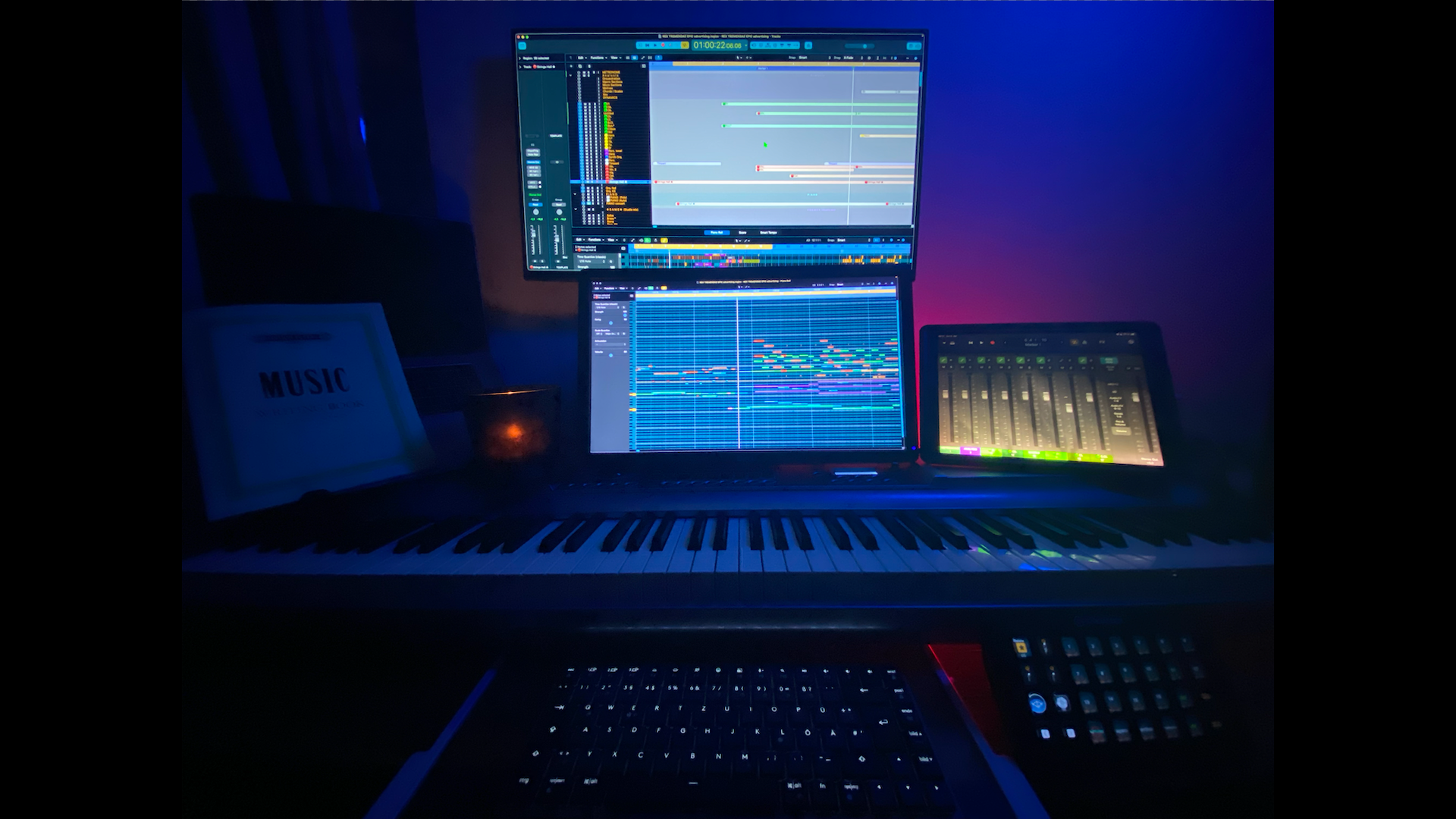
Learn your DAW!
You’ve mastered the art of notation in MuseScore or Dorico, meticulously crafting your compositions with precision and detail. Yet, you know the truth: the power of your score often gets lost when played back with basic built-in sounds. That magnificent symphony, that intricate chamber piece – it sounds like a rough sketch, not the polished, professional orchestral work it truly is.
In today’s competitive landscape for film, game, and media scoring, a high-quality orchestral mockup isn’t just an option; it’s crucial for pitching your work and gaining client approval. Composers increasingly work independently, often without large studio budgets or in-house production teams. While notation software excels at putting notes on a page, it typically falls short in producing the broadcast-ready playback essential for showcasing your talent. You might lack the time, the specialized software, or the intricate expertise to create these professional mockups on your own.
This is why learning DAW (Digital Audio Workstation) MIDI-mockup is indispensable. It’s about taking your beautifully notated scores and transforming them into stunning, realistic audio. Mastering a DAW allows you to:
- Achieve Professional Playback: Go beyond basic MIDI interpretation to create mockups that genuinely impress directors, developers, and potential clients.
- Boost Your Workflow Efficiency: Composers prefer to focus on the creative act of composing. By understanding DAW principles, you can streamline the technical aspects of MIDI editing, cleanup, and mixing, or effectively communicate your needs when outsourcing.
- Meet Industry Demands: From the continuous need for accurate music transcription in educational apps like Yousician, to the rising prevalence of remote collaboration in music production, knowing how to work within a DAW for MIDI ensures your projects are versatile and production-ready.
Learning DAW MIDI-mockup means ensuring your brilliant compositions are heard exactly as you intend them to be – polished, powerful, and aligned with professional expectations.
DID YOU KNOW?
The rapid, continuous evolution of virtual instrument libraries and Digital Audio Workstation (DAW) updates fundamentally transforms modern music production workflows.
This constant advancement, including sophisticated updates in tools like Logic Pro and specialised software (e.g., DivisiMate & VEP integrations), requires composers to continuously adapt their technical skills. Maintaining a professional standard and achieving optimal sonic results demands specialized expertise in navigating these evolving technologies, making a strong MIDI technique and current workflow knowledge essential for competitive freelance work.
Defining Your Musical Path!
 Price 70 Euros, duration from 30 min. to 2 hrs.
The price includes quick chat before and after, on Zoom or Patreon
The consultation is awesome for who is self-taught but faces a moment of chaos or is “stuck”
Contrary to what many teachers apparently think, the first meeting/lesson is for me most important!
We will:
- Establish Your Learning Program: Define your specific musical needs and build a personalized learning curriculum. Here is a fundamental responsibility of the teacher, since a bad assessment can cause irreversible mistakes in your education, like making you give up of music!
- Provide Immediate Feedback: Receive direct feedback on any musical material you bring, ensuring learning begins in this session.
- Offer Career Guidance: Discuss your musical career path and strategies for professional advancement.
- Address Organization: Outline methods for managing your time and materials efficiently.
- Ensure Clarity: The meeting concludes with a clear understanding of your next steps and learning trajectory.
To book a consultation, one needs to be a supporter of the Kompositorium channel on Patreon, contributing for the lowest tier of 5$
FAQ
Q: What if I do not have time to practice regularly?
 A: If there is no other time, we practice in the lessons. If the practice in the lessons requires specific prerequisites, we focus on theoretical topics such as analyzing scores, audios, or music in movies. For MIDI mockup, you start something from scratch, or you watch me solve a problem specifically related to your learning needs. For Eartraining, active practice is required. For Harmony on Piano, we can exercise more during the lesson or you watch me do. For Analysis, Philosophy of Music / Music History, we undertake deep analysis and text reading without requiring previous preparation. HOWEVER: YOU SHOULD PRACTICE AND STUDY AS BEST AS YOU CAN! This is YOUR DUTY AS A FUTURE PROFESSIONAL. Otherwise, consider that you might not be in the right profession!
Q: I cannot commit to all Lesson-Courses. Which discipline should I learn first? A: *Based on years of experience in composition and guiding students, a foundational learning sequence is recommended. This framework also considers the “maximum minimum” for daily practice and lesson effectiveness. The consultation and the following lessons aim to place you in this flexible sequence of learning:
- Piano & Basic Theory
- Eartraining & Tonsatz on Piano
- Score Reading & Orchestration
- Improvisation
- Mockup & Composition This sequence is designed to build skills systematically, ensuring a solid foundation for professional development.
Note on Availability: Please check the available slots in the calendar below for my current flexible teaching hours. Or talk directly to me.
To book a consultation, one needs to be a supporter of the Kompositorium channel on Patreon, contributing for the lowest tier of 5$